How to Plant a Tree in Your Yard

January 16, 2026

There’s an old saying, “The best time to plant a tree is twenty years ago.” While it makes a point about how long it takes trees to grow, it’s not very practical advice. The other half of the saying is more inspiring: “The second-best time to plant a tree is now.” But getting inspired is only the first step. Without some practical tree care knowledge, even well-loved trees can fall victim to incorrect care or accidental neglect.

Some studies estimate the average lifespan of a city tree is only 7 to 13 years. One major cause of this short lifespan is improper planting. Read our expert advice below on how to plant your new tree properly.

Why is proper tree planting important?

Trees planted today also face stressors that trees growing 50 years ago didn’t experience—such as new invasive pests, diseases, changing weather patterns, and increased construction activity. Once you decide to invest the time and energy into adding a new tree to your property, there are several things you can do to give it the best chance to thrive well into the future. A poorly planted tree is at increased risk of pests, diseases, and abiotic disorders.

Common causes of death in newly planted trees

Newly planted trees can be extremely sensitive and therefore require specific planting conditions. These common causes of death are often due to minor mistakes or elements beyond your control. That’s why it’s so important to be extra gentle with your new tree.
  • Planting too deep—even by a matter of a few inches.
  • A planting hole that is too narrow for roots to spread easily.
  • Unhealthy tree stock.
  • Watering too little or too much—allow soil to dry between waterings.
  • Environmental factors such as extreme weather or poor soil.
How to Plant a Tree in Your Yard

How to plant a tree that will thrive in your yard

1. Do some research to find the best species for your location.

2. Choose the proper placement.

  • Allow room for the tree’s future growth above and below ground.
  • Be sure to factor in structures or other plants in your landscape that may compete with it.
  • Consider future building, remodeling, or landscaping plans. Because tree roots are shallow, any digging or soil disturbance near the root zone, including new plantings or a patio, can harm the tree.
  • If you plan to mow around your new tree, be sure to do so properly.

3. Spring and fall are the best times of the year to plant a new tree.

  • Spring: once the ground has thawed.
  • Fall: early in the fall, before the ground freezes.

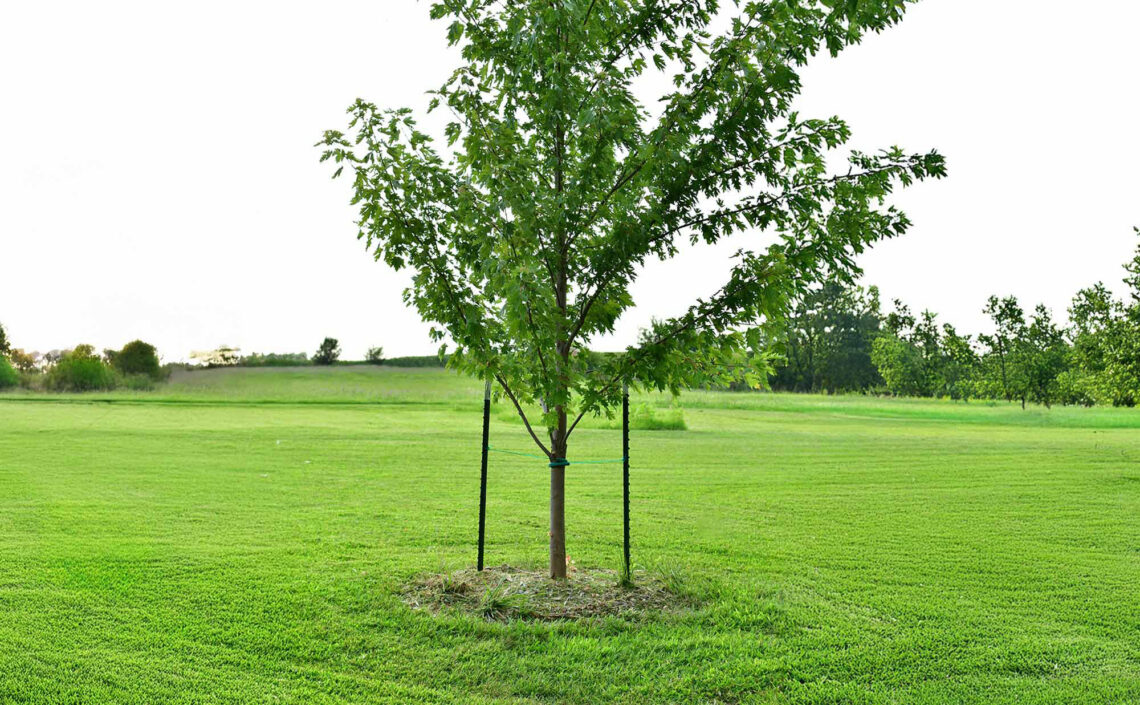
4. Follow proper planting instructions—being sure not to plant too deep!

  • Inspect your new tree for girdling roots or roots wrapping around the base. This often occurs when trees are stored in pots or in burlap and ball, and their roots encircle the stem because they lack space to grow outward.
  • Removing girdling roots before planting prevents root issues once the tree grows larger.
  • Dig a shallow, saucer-shaped hole that is just deep enough to expose the root flare at the ground’s surface. The root flare is the spot where the roots begin to extend sideways from the tree’s trunk.
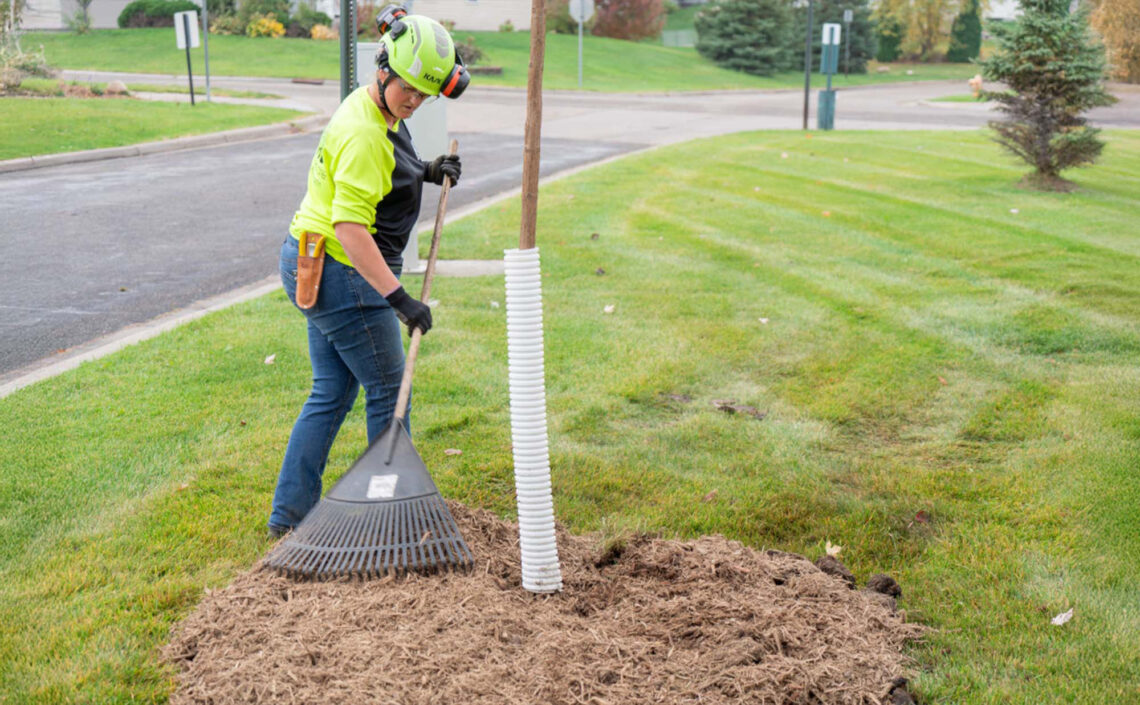
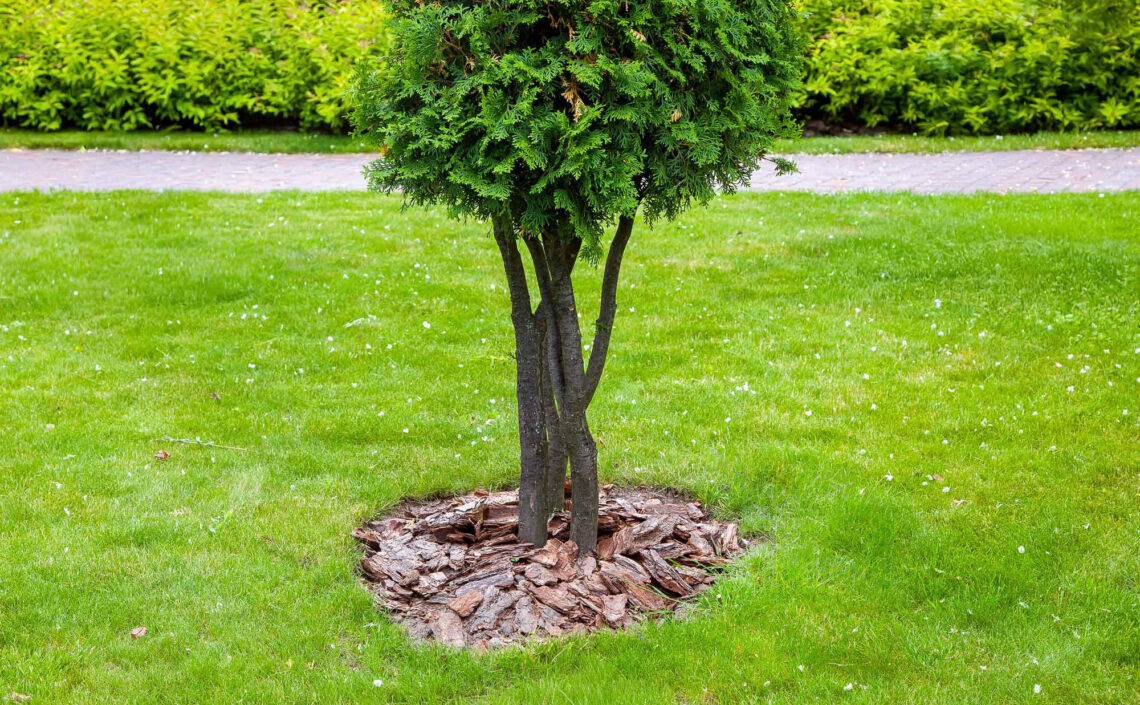
  • Add mulch around the base of the tree to retain moisture around the roots.
How to Plant a Tree in Your Yard

Once your tree is planted, water regularly

  • Keep the tree well-watered over the next five years. (It typically takes five years for a tree to become established.)
  • Water low and slow, using a garden hose or an owl eyes sprinkler at the base of the tree to keep the bark dry. Don’t use traditional lawn sprinklers to water trees, as they encourage fungal diseases.
  • Plan to water about once a week—more often when the weather is hot and dry; less often when it is wet and cool.
  • Read more about proper tree watering from our experts.
How to Plant a Tree in Your Yard

Our Premium Tree-Planting Services

Need help planting? Rainbow offers tree-planting services using premium tree stock with 100% of the roots intact, with the root flare at the surface, and an innovative growing method that gives trees the best chance to thrive. Learn more.

Other items you may be interested in:

We place cookies on your device to enhance site navigation, aid your browsing experience, analyze site usage, and serve you with relevant content. By clicking “Accept All”, you agree to our use of cookies for these purposes. For more information, review our Privacy Policy.