Apple Scab
Apple Scab:
How to Identify, Treat, and Prevent It
August 28, 2026
Before we dig into the details, let’s talk about why apple scab matters for Minnesota homeowners. If you’ve ever watched your apple or crabapple tree go from lush and healthy to spotted and sparse by midsummer, you’re not alone. Seeing blemished fruit or leaves dropping early can be frustrating, but it doesn’t mean you’re a bad gardener; apple scab is incredibly common here. This blog is here to help you spot the signs early, understand what’s going on, and give you practical steps for keeping your trees healthy and looking their best, year after year.
What Is Apple Scab?
Apple scab is a common fungal disease that can show up on any apple or crabapple tree even if you’re doing everything right. If you live in Minnesota, you might not realize that our cool, wet springs actually set the stage for apple scab to take hold. Those damp, chilly days are just what the fungus is looking for.
The good news? While apple scab might look a little scary, it’s something you can absolutely tackle with some simple know-how. In this blog, we’ll walk you through what apple scab is, how to spot it on your trees, and share some practical tips to keep your apples healthy and your harvest bountiful. Let’s dig in together!
Symptoms of Apple Scab
Spotting apple scab early makes a big difference for your apple or crabapple tree.
On Leaves
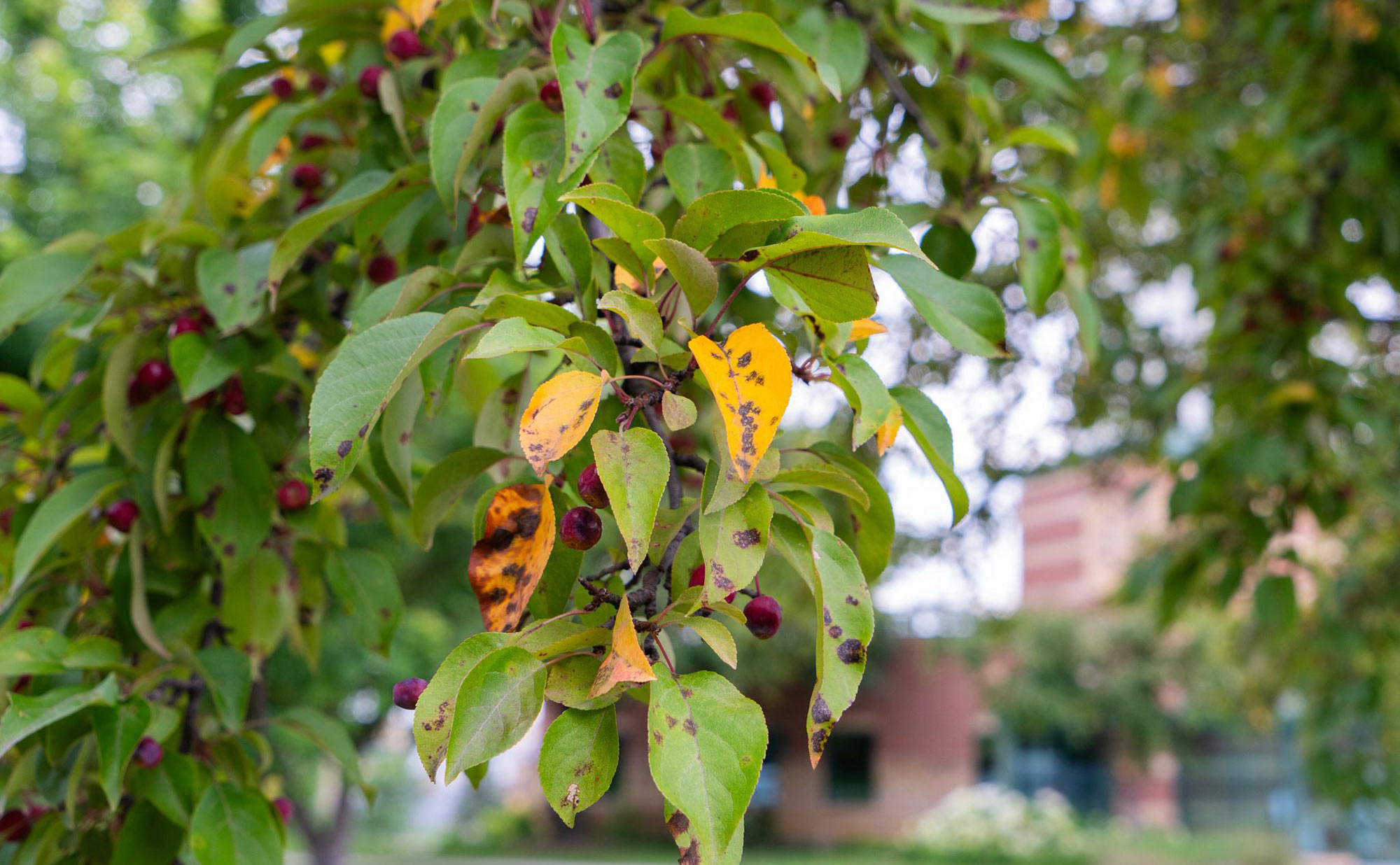
Most people first notice apple scab in mid-summer, when their tree’s leaves start looking a little worse for wear. You might see olive-green or brown spots on the leaves. These start out small but get bigger as the season goes on. Eventually, those spotted leaves turn yellow or brown, and many will drop off earlier than they should. If your tree looks sparse or untidy by midsummer, apple scab is often to blame.
On Fruit
If your apples have rough, scabby, or cracked skin, apple scab is probably to blame. The fruit might look a little blemished, smaller, or odd-shaped, which doesn’t mean it’s inedible, but it’s definitely less perfect for snacking or storing.
On Crabapples
Crabapple trees get apple scab, too, so if you see leaf spots, early leaf drop, or blemished fruit on your ornamental trees, you’re not alone. Some crabapple varieties are a bit more prone to scab than others. Want more details? Check out our apple scab fact sheet.
What Causes Apple Scab and How It Spreads
Apple scab is caused by a fungus that likes to spend the winter on fallen leaves and fruit. Once spring rolls around, especially during Minnesota’s cool, wet spells, the fungus sends out spores that travel on wind and rain. That’s why a little fall cleanup and good tree hygiene can go a long way in keeping scab at bay.
Why Apple Scab Matters for Your Tree
The good news is that apple scab rarely kills a tree. But it can definitely wear your tree down; leaves might drop too soon, and fruit quality can suffer. When apple scab returns year after year, the repeated stress can make trees more likely to develop other problems, too. A little prevention goes a long way to keeping your tree healthy and your apples happy; no drastic measures needed.
How to Treat Apple Scab
Cultural Steps You Can Take
Start with some simple steps: rake up and remove all fallen leaves and fruit in the fall, since that’s where the fungus likes to hang out over winter. Give your tree a little haircut by pruning to improve airflow; this helps leaves dry out quickly and keeps the fungus from spreading. When you water, aim for the base of the tree so the leaves stay dry (making your tree less inviting to unwanted guests).
Fungicide Timing and Professional Treatment
Apple scab is a tricky disease: you won’t see the impact until mid-summer, but the only chance to prevent it is in early spring, so planning is essential. Fungicide treatments are very specifically timed for when crabapple leaves begin to emerge (many arborists say “the size of mouse ears”) and must be done before the leaves get too big. If you miss that window, the effectiveness drops sharply, and there’s nothing you can do for that season.
Because timing and application are so precise, this is not a DIY project. We do not recommend homeowners try to treat apple scab themselves. Instead, connect with an ISA Certified Arborist who can monitor your trees and apply the right treatment at exactly the right time. You can always learn more about disease diagnosis and treatment.
How to Prevent Apple Scab
Ongoing Care and Sanitation
The single most effective way to prevent apple scab on crabapple trees is to treat them every year with a fungicide spray. This needs to be timed very carefully: applications should begin just as the leaves start to emerge in spring and continue as directed by your arborist. Doing this greatly reduces the chance of infection during the vulnerable period.
In addition to spraying, keep up the yearly raking, pruning, and general tree TLC. Healthy, well-cared-for trees bounce back from problems faster and are much less likely to be hit hard by diseases like apple scab.
Choose Scab-Resistant Varieties
Thinking about planting a new apple or crabapple tree? Choosing a scab-resistant variety makes life much easier in the long run. It’s one of the simplest ways to keep your trees healthy and happy from day one. Want to learn more? Check out our guide to planting for a healthier, more diverse landscape.
When to Call a Professional Arborist
If you’re ever scratching your head about what’s going on with your tree, Rainbow’s professional arborists are here to help. Their know-how means less stress for you and better results for your trees and your apples. Whenever you’re ready, you’re welcome to request a consultation no pressure, just solid advice from folks who care.
Frequently Asked Questions About Apple Scab
Olive green or brown leaf spots and rough, cracked blemishes on fruit.
It’s unlikely to kill a tree outright, but repeated infections can weaken it over time.
Remove and destroy infected leaves, prune to improve airflow, and apply fungicide as needed.
We’re here to help you keep your crabapple trees looking great. Reach out anytime to schedule a consultation.
Other items you may be interested in:
Why Tree Diversity Matters in the Twin Cities
The Twin Cities urban forest needs more than just trees; it needs diversity. This article explains why tree diversity is critical for protecting the local canopy from pests and for mitigating the impacts of climate change. Discover your role in fostering a healthier urban forest in your own neighborhood.
Why Leaves Turn Yellow in Summer and How to Help
Chlorosis in trees causes yellowing leaves in summer. Learn the causes, symptoms, and treatment options from Minnesota’s ISA Certified Arborists at Rainbow.
The Real Costs of Tree Care Services in Minnesota
How much does it cost to trim a tree, cut a tree down, or remove a stump? Learn more about the factors that affect tree service costs in Minnesota.